Trees usually do not die abruptly. The difficulty arises in differentiating the signs of unhealthy trees from normal seasonal variations, and recognising that some healthy trees may show worrisome symptoms. This detailed guide will assist you in evaluating whether a tree is unhealthy or nearing its end. It covers the key indicators our arborists monitor during assessments in Newcastle and the Hunter region, and explains when it is wise to organise a professional onsite tree health evaluation.
Since 1998, Waratah Professional Tree Care has been committed to preserving and maintaining trees across Newcastle, Lake Macquarie, Maitland, and the Hunter region. If you notice any changes in a tree on your property, it’s crucial to investigate further.
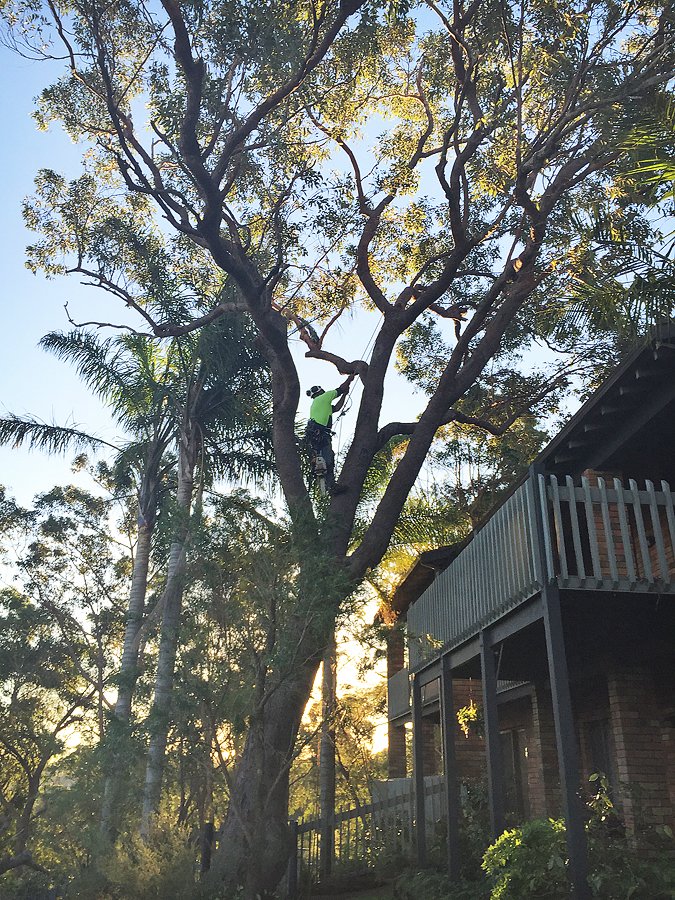
What Are the Primary Indicators of Tree Illness or Decline?
An unhealthy tree often shows initial symptoms in its canopy, followed by alterations in its trunk and bark, and ultimately in its roots and the surrounding soil. Spotting a single indicator might not cause alarm, but multiple signs or the worsening of a single sign is a strong indication that a qualified arborist should perform a comprehensive assessment.
Here are the specific indicators our arborists monitor during tree evaluations:
- Thinning leaves or bare spaces in the canopy
- Branches dying back from their tips
- Leaves wilting, turning brown, or dropping unexpectedly
- Visible cracks or splits in the trunk or major branches
- Fungal growth, such as mushrooms or brackets, at the base or along the trunk
- Hollows, soft wood, or sawdust around holes in the bark
- A tree that has begun to lean or shows lifted soil around its roots
How Do You Recognise Illness in a Tree’s Leaves and Canopy?
The canopy of a tree is often the first area where problems become noticeable. When a tree experiences stress, it may reduce its leaf count, resulting in a sparser canopy that reveals more sky than in previous years. Comparing an old photograph of the tree to its current state is an effective method to detect gradual decline.
Dieback is another common indication of a tree’s distress. This occurs when the outer twigs and branches die off first, causing the dead sections to recede towards the trunk. For instance, on a eucalyptus tree, bare, grey branch tips may become apparent above the healthy green leaves. Sudden dieback following a storm might suggest lightning damage, as seen in a Spotted Gum evaluated in Adamstown Heights.
Leaves that wilt, yellow, or turn brown unexpectedly should also raise concerns. It’s important to consider the species of tree before jumping to conclusions. Deciduous trees naturally shed their leaves in autumn and winter, so a bare tree in July is generally healthy. if a tree loses its leaves in spring or summer, it indicates a different issue.
What Insights Can the Trunk and Bark Provide About a Declining Tree?
The trunk is essential for transporting water to the leaves and sugars to the roots through a delicate layer of living tissue called cambium, located just beneath the bark. Damage to this layer can severely hinder the tree’s ability to thrive, leading to deterioration in the sections above the injury. Damage to the trunk often has more serious implications than it may initially seem.
Cracks and splits in the trunk or significant branches are structural warning signs. These cracks can allow water and fungi to infiltrate the wood, signalling that the branch or trunk is already under stress. It is advisable for an arborist to evaluate large cracks, especially where two main stems converge, rather than waiting to see how the situation develops.
Homeowners in Newcastle often misinterpret bark shedding as a problem. Many native gums naturally shed their bark in strips or patches each year, revealing fresh, vibrant bark beneath, which is entirely normal. Our focus is on bark that has peeled away to expose dry, dead wood, cracked and sunken bark, or bark that has been scorched or blown off in strips along the trunk.
How Can You Identify Fungal Growth, Hollows, and Pests on a Sick Tree?
Fungal growth at the base or on the trunk of a tree is one of the most concerning indicators we encounter. The presence of mushrooms or hard, shelf-like brackets growing from the wood typically signifies internal decay. By the time fungi become visible externally, internal decay may have progressed significantly. A tree may appear healthy in its canopy while its trunk or roots are deteriorating.
Hollows can be a natural feature of an older tree’s life and do not always signal that the tree is unsafe. The size of the hollow, its location, and the amount of healthy wood remaining nearby are all critical factors. A hollow at the base of a large tree close to a house requires a different response compared to a small hollow located high in a branch.
Pests and diseases often target trees already under stress. Damage from storms, lightning strikes, or improper pruning creates entry points for fungal diseases and wood-boring insects. Signs of insect activity include fine sawdust around small holes in the bark, weeping sap, or mud tracks climbing the trunk. Our arborists assess for pests and diseases as part of a thorough tree health evaluation.
What Ground and Root Indicators Suggest a Tree Is in Distress?
Roots are usually hidden from view, so most root problems are indicated by changes in the surrounding ground or the tree’s position. A tree that begins to lean, particularly if it previously stood straight, is a warning sign. Similarly, soil that has cracked, lifted, or formed mounds on one side of the trunk may indicate that the roots on the opposite side are no longer providing adequate support.
Environmental changes surrounding a tree can also lead to decline. Activities such as trenching for pipes or cables, constructing a new driveway, or adding extra soil over the root zone can damage essential roots. The effects may not be noticeable until a year or more later, causing individuals to overlook the connection. If a tree has started to decline following nearby construction work, please mention this when you reach out to us.
How Can I Differentiate Between a Dead Tree, a Dying Tree, and a Dormant Tree?
In winter, a dead tree and a dormant tree can appear quite similar, especially with deciduous trees that have lost their leaves. The distinction becomes evident in spring. A dormant tree will sprout new buds and leaves as the weather warms, while a dead tree will remain bare. If most of a tree fails to leaf out during spring and summer, it is likely dead or dying.
Some trees respond to stress by producing numerous small new shoots along the trunk and main branches. While this new growth may seem encouraging, it often indicates that the tree is struggling to replace lost foliage. In the case of the Spotted Gum, the regrowth suggested the tree was attempting to recover, and monitoring the amount of new growth in the following months would reveal whether it could bounce back or needed to be removed.
A dead tree is inherently unstable. As the wood dries and decays, limbs become brittle and may fall unexpectedly, even in calm conditions. If you suspect a tree is dead, it is wise to arrange for its removal rather than waiting for it to collapse on its own. Our tree removal service in Newcastle addresses dead, dying, and hazardous trees on properties owned by homeowners, strata bodies, and businesses.
When Does a Sick Tree Become a Safety Hazard?
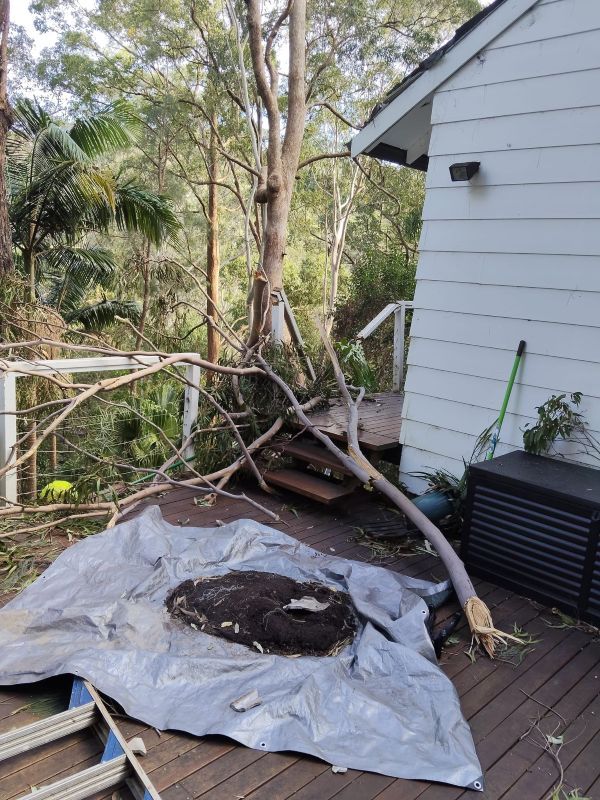
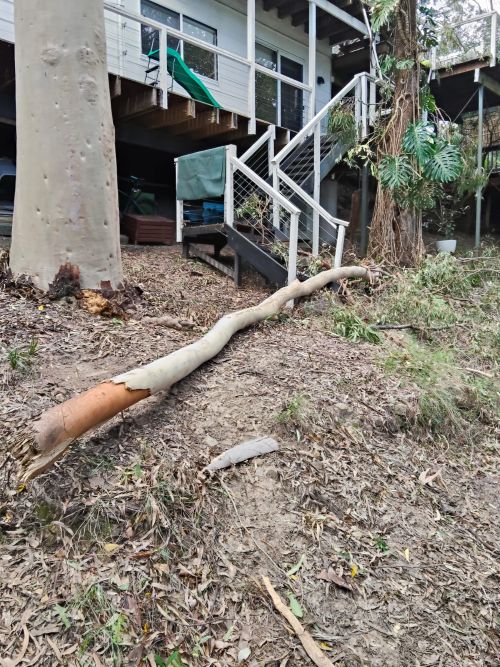
A sick tree poses a safety risk when its structural integrity is compromised, particularly if it is located near anything that could sustain damage if it were to fall. A tree with a sparse canopy in an open field may be a health concern, but the same tree leaning over your roof, driveway, or neighbour’s fence presents a safety issue.
Be alert for these signs that indicate a tree may require immediate attention:
- A tree that has suddenly started to lean
- Large limbs that are split, hanging, or have already fallen
- Deep cracks in the trunk or at the junction of main stems
- Lifting roots or soil heaving at the base
- Signs of decay, hollows, or fungal growth near the base of a large tree
- Damage from lightning strikes, strong winds, or flooding
If you observe any of these indicators, keep people and pets away from the tree until it has been assessed. Our page on dangerous and storm-damaged trees outlines our approach to managing hazardous trees and storm damage throughout Newcastle.
Is Rehabilitation Possible for a Sick Tree?
Many sick trees can be salvaged, particularly when issues are identified early. The potential for recovery depends on the underlying cause, the species of tree, the extent of the damage, and the tree’s overall health prior to the onset of the problem. A tree exhibiting some dieback due to a dry season may respond positively to appropriate care, while a tree with significant trunk decay may not.
When a tree can be saved, common strategies include pruning to eliminate dead, diseased, or weakened branches, addressing the specific identified issues, or monitoring the tree over time to assess its response. If removal is considered the safer option, we will explain our reasoning and guide you through the process. If you are unsure whether you require permission to remove a tree, our guide on council approval for tree removal in Newcastle is a valuable resource.
How to Arrange an Onsite Tree Health Assessment in Newcastle
When a tree appears unwell, seeking the expertise of a qualified arborist is essential. Our arborists possess extensive knowledge of tree biology, structure, and disease management. For most straightforward tree work, our free online quote form is effective, allowing you to submit a photo of the tree for review. If you are uncertain whether a tree is sick, unsafe, or simply experiencing normal seasonal changes, an in-person assessment by an arborist is necessary.
During an onsite consultation, our arborist will visit your property to evaluate your trees and discuss the findings on the same day. The assessment includes:
- The condition and health of each tree
- Potential risk factors such as structural weaknesses, diseases, root issues, or proximity to buildings
- Your options for action, whether it involves removal, pruning, treatment, or monitoring
- Our recommendations for the most effective course of action
The consultation fee is separate from any tree work, and there is no obligation to proceed. We will confirm the fee at the time of booking. If you decide to proceed with pruning or removal after the assessment, we will provide a full quote at that time.
An onsite tree health assessment is particularly advantageous when a tree appears unhealthy or unstable, has sustained storm damage, is large or situated close to your home, or when you are uncertain whether it should be removed or can be saved.
Common Queries About Sick and Dying Trees
How can I tell if my tree is dying?
Common indicators of a dying tree include a thinning canopy, branches dying back from the tips, leaves dropping unexpectedly, fungal growth on the trunk or base, and visible cracks or dead wood beneath the bark. One sign alone may not be concerning, but multiple signs indicate that an arborist should evaluate the tree.
Is it normal for gum trees to shed their bark?
Yes, many eucalyptus trees naturally shed their bark in strips or patches, revealing fresh, brightly coloured new bark underneath. Bark shedding is only a concern when it exposes dry, dead wood, if the bark is cracked and sunken, or if a strip has been scorched or blown off, which may indicate lightning damage.
What does a tree health assessment involve?
Our arborist conducts a thorough evaluation of the condition and health of each tree on your property, examining the canopy, trunk, bark, roots, and the surrounding ground. We assess for diseases, pests, structural weaknesses, and potential risks to buildings, and discuss your options on the spot, including pruning, treatment, monitoring, or removal.
Should a dead tree be removed immediately?
Yes, a dead tree should be removed before it begins to shed limbs. Dead wood becomes brittle as it dries and decays, leading to branches that can fall unexpectedly. If the tree is located near your home, a fence, driveway, or areas frequented by people, plan for its removal soon while maintaining a safe distance from it in the meantime.
Which regions do you cover for tree health assessments?
We conduct tree health assessments throughout Newcastle, Lake Macquarie, Maitland, Port Stephens, and the wider Hunter region. When you contact us, please provide the property location and the number of trees you would like assessed, and we will arrange a suitable time for the visit.
Get in Touch with an Arborist for Tree Health Concerns in Newcastle
If you notice any signs of distress in a tree on your property, timely evaluation enhances your management options. Early intervention can make the difference between simply pruning a few branches and necessitating the removal of the entire tree. Describe what you have observed, the tree’s location, and how long it has appeared unwell, and we will advise whether a free online quote or an onsite tree health assessment is the most appropriate initial step.
Contact Waratah Professional Tree Care at (02) 4956 6602 or 0414 706 653, or send us a message online. Steve, Salena, or another member of our team will reach out to arrange a time to assess the tree.
Original Article First Published At: How to Identify Signs of a Sick or Dying Tree: Insights from Waratah Professional Tree Care Arborists in Newcastle
The Article: Signs of a Sick or Dying Tree: Newcastle Arborists’ Insights first appeared on https://writebuff.com
The post Signs of a Sick or Dying Tree: Insights From Newcastle Arborists appeared first on Limits Of Strategy.
References:
Signs of a Sick or Dying Tree: Insights From Newcastle Arborists
Signs of a Sick Tree: Expert Insights from Newcastle Arborists