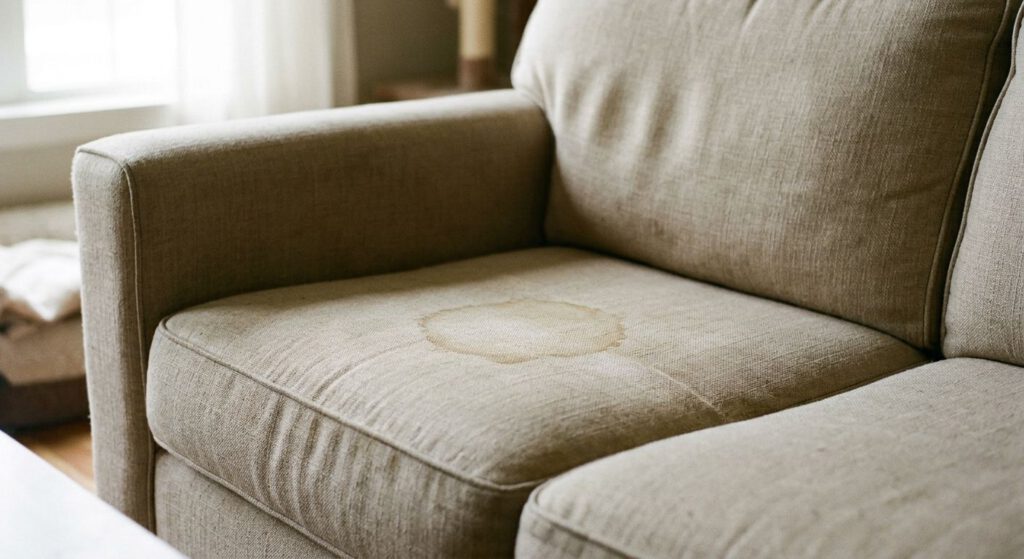
Imagine a glass of water toppling over, a damp towel lying on a sofa, or someone gently blotting a small spill with a wet cloth. As the moisture evaporates, you might observe a light ring or a brown edge on the upholstery after a few hours—an indication that wasn’t there before. Finding a water stain on your couch can be quite annoying, especially when it’s simply water that caused it.
This comprehensive guide explores the various causes of water stains on fabric couches, pinpoints which types of water stains can typically be treated with effective cleaning methods, highlights more stubborn stains, and offers advice on when to reach out for help from a professional sofa cleaning service in Sydney.
What Factors Contribute to Water Stains on Fabric Couches?
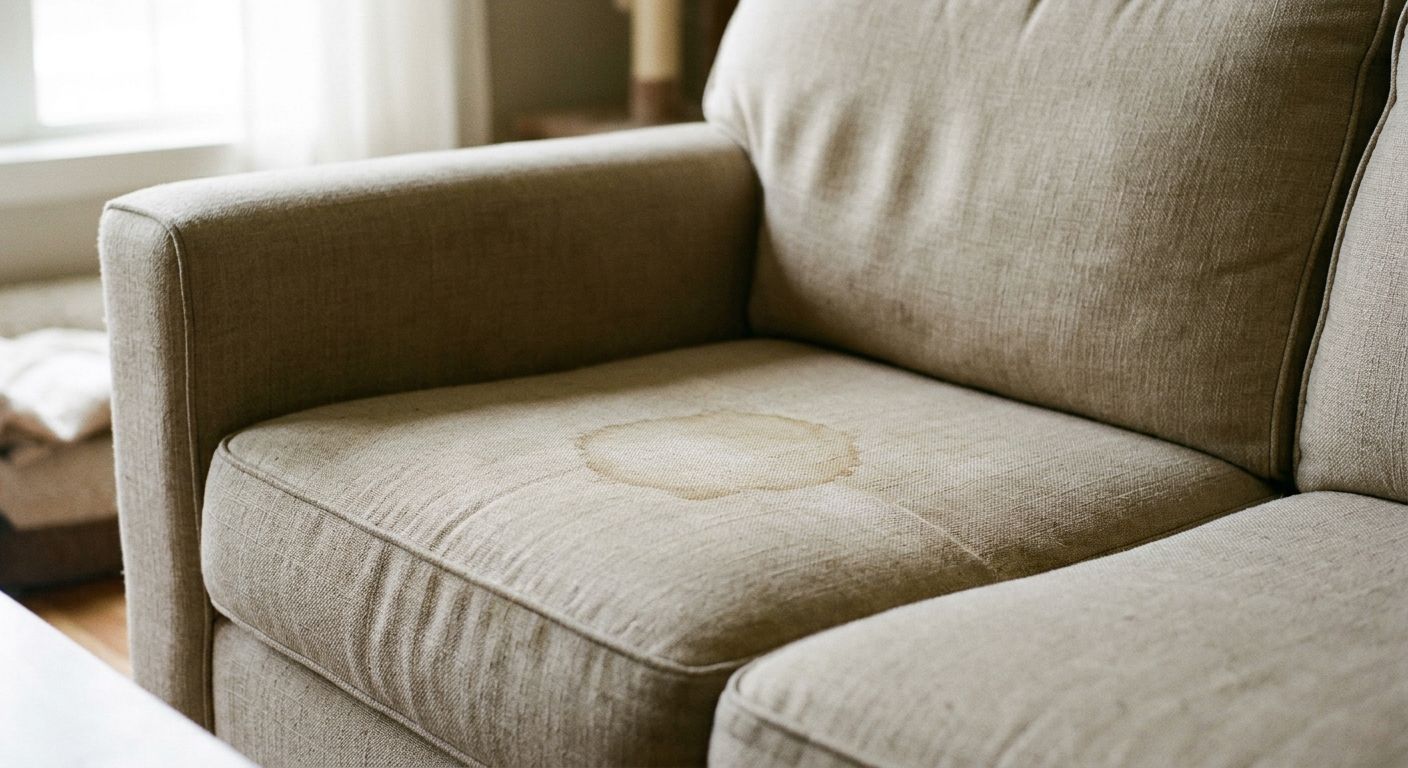
Water leads to stains primarily because it redistributes other substances as it dries. When part of the upholstery gets wet, the water lifts dirt, old residues, and sometimes loose dye from the fabric. As the wet area dries from the outer edges inward, the water carries these materials to the perimeter of the damp spot, creating a ring that defines the original spill.
Another critical aspect is what lies beneath the fabric. A couch is composed of multiple layers, including the fabric, foam, webbing, and a frame. water can seep deeper than what is initially visible. As the foam dries, moisture may rise back to the surface, bringing dissolved dirt along with it. This process, known as wicking, explains why a stain may emerge days after the spill appears to have dried. For further information on wicking, check out our article that compares professional couch cleaning with rental machines.
Warwick Fabrics, a prominent Australian supplier of upholstery fabric, warns in its cleaning guide that excessive moisture during spot cleaning can result in water marking and affect the underlying structure, potentially leading to more stains. Essentially, the appearance of a water stain often arises not just from the water itself, but also from what the water has displaced and how deeply it has penetrated the couch.
How Can You Identify the Type of Water Stain on Your Couch?
Water stains on upholstery can vary significantly in appearance. By examining the colour and shape closely, you can gain valuable insights into the stain’s nature and the likelihood of successful removal.
- A light or dark ring with a clear centre: This indicates that dirt and residues have been pushed to the edge of the wet area during drying.
- A brown edge or halo: This occurs when water interacts with the fabric fibres or drags colour and residues along, often found in natural fibres and water-sensitive materials.
- A mark that reappears after cleaning: This implies moisture has penetrated deep into the foam, bringing soil back to the surface as it dries.
- A yellow or brown stain along the base of the couch: For lighter couches, a soaked frame can leach timber tannins into the fabric, making it very challenging to reverse.
- A dull or flattened patch on velvet: The pile of the velvet may dry flattened or in different directions, affecting how light reflects off it.
Which Types of Fabric Couches Are Most Vulnerable to Water Stains?
The fabric type plays a crucial role in determining how a couch reacts to water. Most couches display a cleaning code on a tag located under the cushion or on the frame, indicating whether water is suitable for cleaning. A code of W means that water-based cleaners are acceptable, S denotes solvent only, W-S indicates either option is suitable, and X signifies that only vacuuming is permitted. For S or X fabrics, plain water can leave a watermark that may be difficult to remove with further applications of water. Our guide on understanding the W, S, W-S, and X tags on your lounge explains how to locate the code and what each letter represents.
Fabrics particularly susceptible to water marking include velvets, linens, viscose blends, and many designer fabrics often found on contemporary couches. Viscose deteriorates when wet and may become distorted, while linen can shrink and watermark easily. Velvet often contains viscose and is usually coded S, meaning a damp cloth can both leave a ring and crush the pile. If your couch is made of velvet, our article on how to clean a velvet sofa without crushing the pile provides detailed instructions.
Is It Possible to Successfully Remove a Water Stain from a Couch?
Many water stains on fabric couches can either be removed or significantly improved, although this is not guaranteed for all stains. The outcome hinges on three key factors: what the water has transported, the type of fabric and its cleaning code, and the cleaning methods previously attempted on the stain.
The soil that forms the ring remains trapped within the fibres. An effective cleaning technique that uniformly removes this soil across the entire panel while ensuring the fabric dries quickly can eliminate the stain’s outline.
Some stains are more challenging to eliminate. If water has transported dye from the fabric, if timber tannins have leached from the frame, or if the fibres have been damaged, the stain may become permanent. Repeated at-home cleaning attempts can also reduce the chances of successful removal, as each scrubbing and re-wetting tends to spread the ring further and push residues deeper into the fabric. For velvet, a professional low-moisture re-clean and controlled drying can often even out a water ring, but results are not guaranteed once a ring has set. Before commencing the cleaning process, the technician inspects both the fabric and the stain, providing insights into the expected outcomes.
What Actions Should You Take Immediately After Water Spills on Your Fabric Couch?
The moments immediately following a spill are critical in determining whether it dries without a trace or leaves a noticeable water stain. Your primary goal should be to extract the water from the couch rather than attempting immediate cleaning.
- Quickly blot the area with a clean, dry, white cloth or towel. Press down, lift, and then move to a dry section of the cloth.
- Avoid rubbing. Rubbing pushes water deeper into the fabric’s weave and spreads the edge of the wet area.
- Check the cleaning code before applying any additional products to the fabric.
- Do not remove cushion covers for separate washing, even if they have zips. Warwick Fabrics advises against detaching covers for individual cleaning.
- Allow the area to dry in a shaded location, away from direct heat sources.
If a ring has already formed, refrain from taking further action. Adding more water to a dried water stain usually enlarges the ring, and on S or X fabrics, this may result in a permanent mark. Warwick Fabrics also notes that cleaning entire fabric panels is generally more effective than trying to spot clean small areas, which can be challenging to do evenly at home without causing over-wetting.
Why Do DIY Cleaning Attempts Often Exacerbate Water Stains on a Couch?
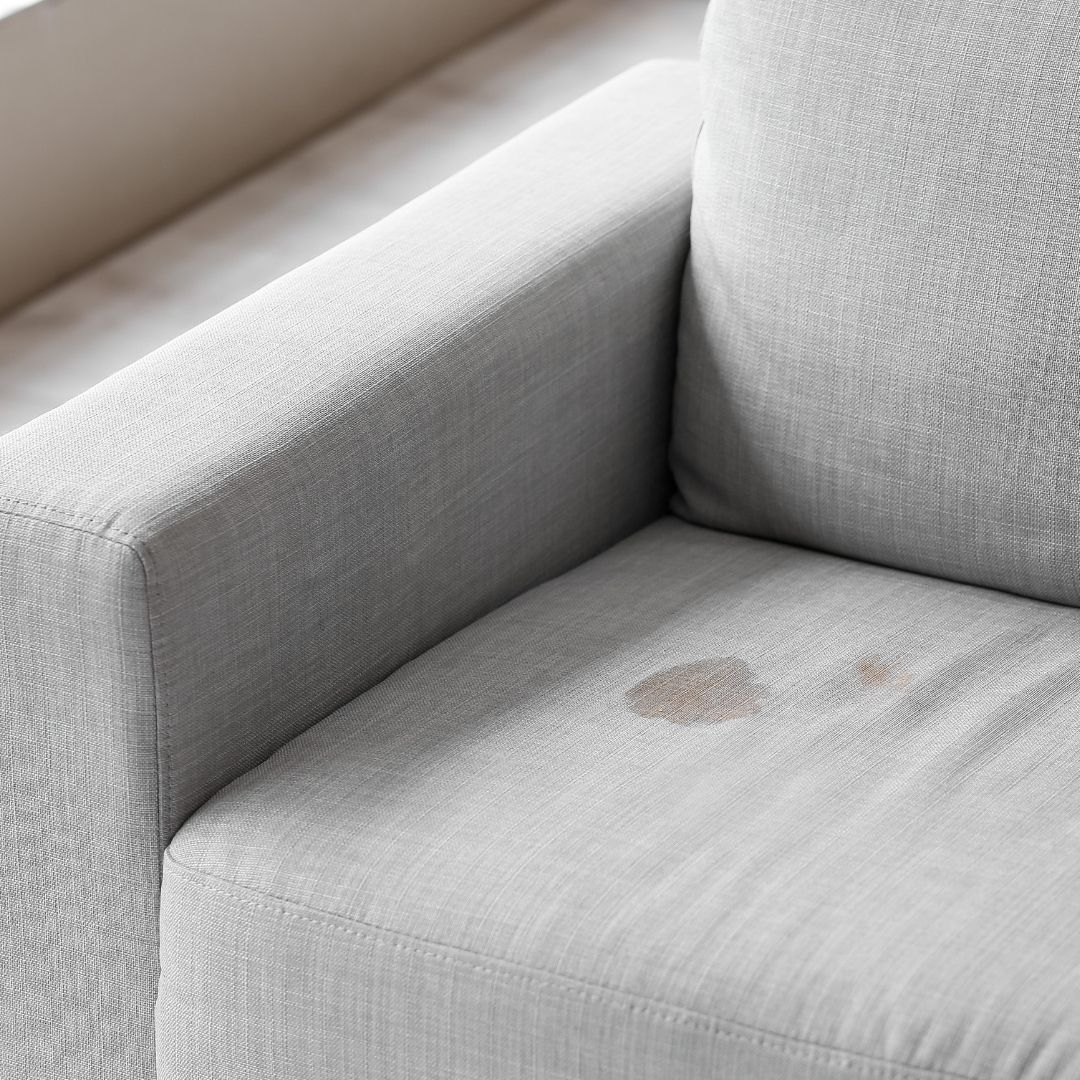
Many individuals instinctively grab a damp cloth and some detergent, scrubbing at the ring. This approach introduces additional water, which can enlarge the stain. If detergent is not thoroughly rinsed out, it leaves a residue that attracts dirt, causing the cleaned area to appear darker than the surrounding fabric. Rental machines inject a large volume of water into the couch and lack control over the drying speed of the foam, leading to wicking and unpleasant odours.
Each additional attempt can limit options for professional cleaning since a stain treated with unsuitable products is often harder to lift evenly. We discuss common pitfalls in our article on why DIY spot cleaning frequently worsens stains. If the mark is a ring rather than a fresh spill, scheduling a professional clean early provides the best chance for a successful outcome.
How Does Wundaguard Effectively Eliminate Water Stains from Fabric Couches?
Wundaguard has been cleaning and protecting upholstery throughout Sydney since 1983. Our sofa cleaning process adheres to a systematic seven-step approach tailored to the specific fabric and stain type. Throughout the cleaning process, the technician carefully manages moisture levels and drying speed, ensuring that even drying prevents new rings from forming.
- Inspection of the fabric type, cleaning code, condition of the couch, and the water stain itself.
- A pre-vacuum to remove dry soil and dust from the surface and crevices.
- Pre-spotting of the stain and any other marks.
- An even pre-spray of cleaning solution over the entire panel to ensure thorough treatment.
- A deep clean using hot water extraction or a dry, low-moisture method, selected based on the fabric type.
- Spot treatment for any remaining stains.
- Deodorising to leave the couch smelling fresh.
Durable, colourfast fabrics typically undergo hot water extraction. Delicate fabrics, natural fibres, and those that should not be excessively wet are cleaned using a dry or low-moisture method. The criteria for selecting between the two methods are detailed in our guide on whether sofas should be steam cleaned or dry cleaned. Sofa and couch cleaning services start from $55 per seat, and further details can be found on our sofa cleaning Sydney page.
What Measures Can You Take to Prevent Future Water Stains on Your Couch?
Applying fabric protection can provide an additional layer of defence. A protected fabric absorbs liquids more slowly, enabling spills to remain on the surface long enough to be blotted away before soaking into the foam. This is especially crucial for water-sensitive fabrics prone to marking. Wundaguard offers fabric protection starting from $44 per seat, which can be applied during the same visit as a sofa clean.
Protection must be paired with proper care. Warwick Fabrics stresses that fabric protectors do not eliminate the need for regular vacuuming, routine cleaning, or general maintenance. Promptly blotting spills, keeping wet towels and swimsuits off the cushions, and scheduling regular couch cleaning all contribute to reducing the risk of future water stains.
Frequently Asked Questions About Water Stains on Couches
Will a water stain on a couch eventually disappear on its own?
The ring comprises soil, residues, or dye that the water has shifted to the edge of the wet area, and this material remains in the fibres until it is evenly cleaned out. Leaving the ring undisturbed is generally more advisable than scrubbing it with additional water.
Are water stains on a fabric couch permanent?
Many water stains on fabric couches can be significantly improved or removed, especially if addressed promptly. Stains are more likely to become permanent if the water has carried dye, if timber tannins have bled from the frame, or if the fibres have been damaged due to repeated home cleaning attempts.
Why did a water stain appear after I cleaned my couch?
A mark that emerges after cleaning typically results from wicking. Excess water has infiltrated the foam, and as it dries, it brings dissolved soil back to the surface. This indicates over-wetting rather than a failure to remove the stain.
Can you successfully remove a water stain from a velvet or linen couch?
Velvet and linen require a low-moisture cleaning method and careful drying, as both are easily marked by water. Velvet also necessitates grooming of the pile during drying to prevent it from becoming crushed. A professional low-moisture re-clean and controlled drying can often even out a water ring on velvet, but results are not guaranteed once the ring has set.
How much does it cost to clean a water stain off a couch?
Wundaguard provides sofa and couch cleaning services priced per seat, starting from $55. The total cost depends on the size of the couch, the type of fabric, and its condition. Fabric protection can be added after the clean for a fee starting from $44 per seat. For a quote on your couch, please call 1300 360 824.
Book Your Professional Sofa Cleaning for Water Stains in Sydney
If you discover a water stain on your couch, promptly blot it dry, check the cleaning code, and avoid disturbing the ring until a professional can assess the fabric. Wundaguard offers cleaning services for fabric couches across Sydney, from Smeaton Grange and the Macarthur region to the inner suburbs. Inform us of the fabric type, the substance that was spilled, and any cleaning attempts made so far, and we will recommend the best cleaning method for your couch. Call 1300 360 824 or contact Wundaguard to arrange your appointment.
Original Article First Published At: Wundaguard’s Guide to Why Water Leaves a Stain on a Fabric Couch, and When It Will Come Out
The Article: Why Water Stains Fabric Couches: Wundaguard’s Insights first appeared on https://writebuff.com
The post Water Stains Fabric Couches: Insights From Wundaguard appeared first on Limits Of Strategy.